
Quick Answer: Don’t just flip the breaker back on. Check for standing water inside the motor housing, debris jammed in the impeller, and a tripped GFCI first — running a flooded motor before it’s dry is the single most common way a storm turns into an expensive motor replacement.
- Cost: Free (inspection) to $180–$450 (motor if flooded)
- Difficulty: Easy to Moderate
- Time Needed: 20–45 minutes
- Tools: Flathead screwdriver, shop vac, multimeter
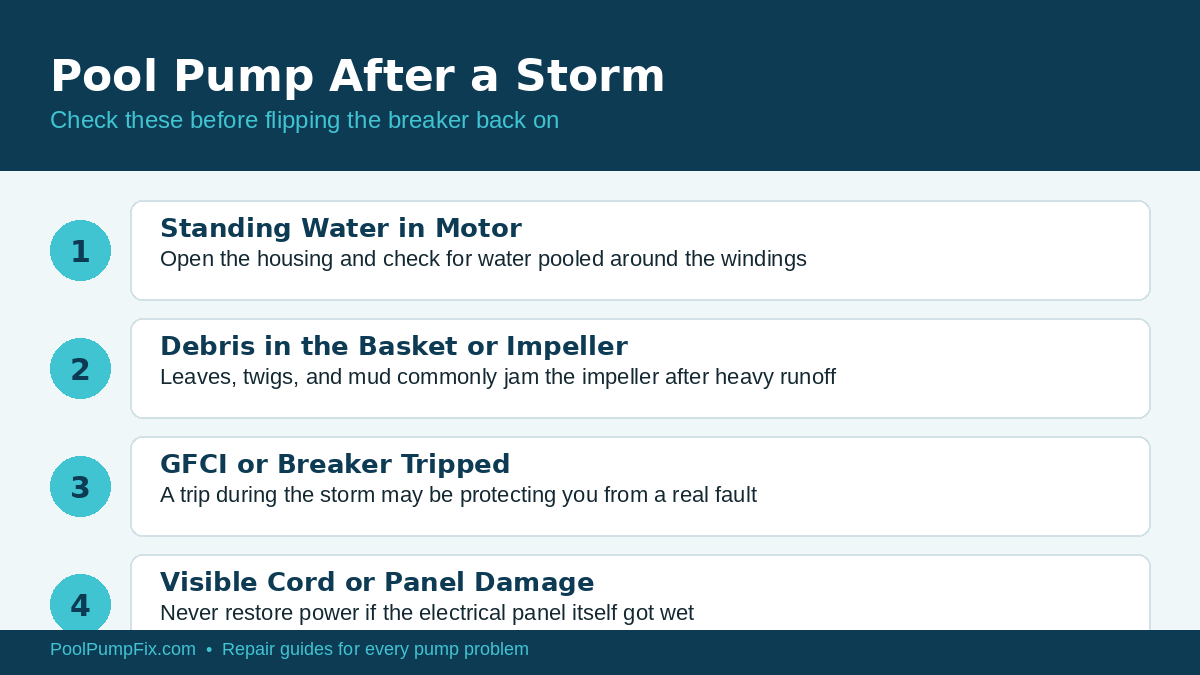
Heavy rain, flooding, or a fallen branch during a storm can affect a pool pump in ways that aren’t obvious from the outside. If the storm actually submerged the equipment pad, treat this as an electrical safety issue first and a repair issue second — motors and electrical panels don’t forgive being run wet.
Step 1: Don’t Touch the Breaker Yet
If there’s any standing water still near the pump, motor, or electrical panel, leave the breaker off and don’t touch anything until the area is dry. Water and electrical components are a serious shock hazard, and a few extra hours of drying time costs nothing compared to the risk.
Step 2: Open the Motor and Check for Water
Once it’s safe to work on, remove the rear cover or vent cap on the motor and look inside. A little condensation is normal; standing water pooled around the windings is not. If you see actual water inside the motor housing, do not power it on — running a submerged motor can short the windings instantly and turn a $30 drying job into a $200+ motor replacement. Let it air-dry in a warm, ventilated spot for 24–48 hours, or use a hair dryer on low heat from a safe distance to speed things up.
Step 3: Check the Basket and Impeller for Debris
Heavy storm runoff pushes leaves, twigs, mulch, and mud into the skimmer and pump basket in volumes far beyond normal operation. Open the pump lid and clear the basket completely, then check that the impeller inside spins freely by hand — a jammed impeller will trip the breaker or stall the motor the moment you restart it.
Step 4: Test the GFCI Before Assuming It’s Just the Storm
If the pump’s GFCI or breaker tripped during the storm, that’s often the system working correctly, not failing. Reset it once everything is confirmed dry and debris-free. If it trips again immediately, treat that as a real electrical fault, not storm noise — see my breaker-tripping guide for the next steps.
Step 5: Restart and Watch Closely
Once you’ve confirmed dry electrical components, a clear impeller, and a breaker that holds, restart the pump and stay nearby for the first several minutes. Listen for grinding, watch for unusual vibration, and check that water is actually flowing through the return jets — any of those being off is a sign something still needs attention before you leave it running unattended.
When to Call a Professional
If the equipment pad was fully submerged — not just splashed, but underwater — have an electrician check the panel and wiring before you restore power, regardless of how the pump itself looks. Panel damage from flooding isn’t always visible from the outside.
Prevention Tips
- If your equipment pad floods regularly during storms, consider having it raised or regraded — it’s cheaper than repeated motor replacements.
- Keep a shop vac or wet/dry vac on hand specifically for clearing standing water around the pad after major storms.
- Cover the motor (not airtight, just rain-deflecting) if it sits fully exposed and storms are frequent in your area.
FAQ
Is it safe to run my pool pump if it got rained on?
Normal rain on a properly installed outdoor pump is fine — it’s designed for that. Actual flooding or submersion of the motor housing is the concern this article addresses.
How long should I wait before restarting a flooded pump?
At minimum 24 hours of air-drying in a warm, ventilated area, and longer if you can still see or feel moisture inside the motor housing.