
Quick Answer: A pool pump that runs dry damages itself, and the shaft seal goes first. The seal faces rely on water for cooling and lubrication, so a dry pump can overheat the seal in a matter of minutes and, if it keeps running, warp the plastic around it.
- Cost: Free to $25, more if the housing warped
- Difficulty: Moderate
- Time Needed: 30–90 minutes
- Tools: Socket set, screwdriver, silicone lubricant
This usually happens quietly. The water level drops below the skimmer, or a basket packed with leaves starves the pump, and the pump keeps running while it pulls air. If your pump lost water flow and you aren’t sure how long it ran, here is how to check it. For the priming side of the problem, see pool pump losing prime.
Why the Seal Fails First
The mechanical shaft seal sits where the motor shaft enters the wet end. It is a pair of polished faces, one spinning and one stationary, and the water passing through the pump cools them. Without water the faces heat up, the rubber parts harden or burn, and the seal starts leaking. If you want the full picture of that part, read my shaft seal leak guide.
What Else Can Be Damaged
If the pump runs dry long enough, heat spreads into the plastic parts. The diffuser and impeller can distort, and the housing can soften near the seal plate. A warped part will not seal properly even with a new seal, so look closely before you spend money on parts. The motor itself is usually fine unless the pump also locked up and overloaded it.
Signs the Pump Already Ran Dry
- A drip or stream of water at the gap between the motor and the wet end.
- A squeal, or a burnt rubber smell when the pump runs. See burning smell from a pool pump.
- Discolored, shiny or softened plastic around the seal plate.
- Weak flow even after the pump is primed.
Step-by-Step: After a Dry Run
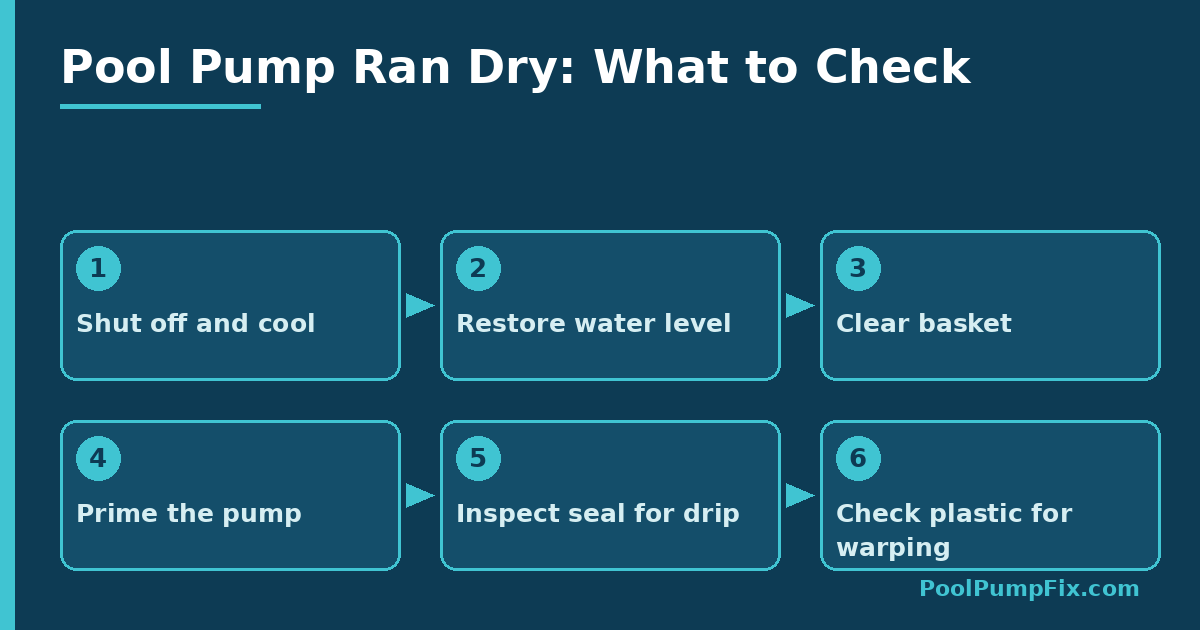
- Turn off the pump at the breaker and let it cool before you open anything.
- Restore the water level in the pool so the skimmer has a normal supply.
- Inspect the lid O-ring and basket and clear any debris that starved the pump.
- Prime the pump using my priming guide and run it for a few minutes.
- Check for a drip at the seal now and again after a full day of running. A leak means the seal needs replacing; see seal plate replacement.
When to Call a Professional
If the plastic around the seal looks warped or melted, or the motor smells burnt even after you restore flow, stop running the pump. A damaged housing should be replaced, and a motor that overheated may be on its way out.
Prevention Tips
- Check the water level weekly in hot, dry weather. Evaporation drops the pool faster than most people expect.
- Empty the pump basket and skimmer baskets before the pump runs unattended.
- Keep the suction valves open and confirm the pump primes within a minute or two of starting.
- Consider an automatic water leveler if you are often away.
FAQ
How long can a pool pump run dry before it is damaged?
It varies with the pump, but the seal can start to fail within a few minutes. Treat any dry run as a reason to inspect the seal.
Can a pool pump recover after running dry?
Often yes, if you catch it quickly. Replace the seal if it leaks and check the plastic parts for warping.