
Quick Answer: If a pool pump motor is wet inside, leave the power off, find where the water came from, dry the motor completely, and check the capacitor, shaft and insulation before you restart it. A motor that only got damp is often recoverable, while one with heavy rust or a burnt smell usually is not. If the GFCI still trips after it has dried, have the motor tested.
- Cost: Free to $400 for a motor
- Difficulty: Moderate
- Time Needed: 1 hour plus 1–2 days drying
- Tools: Screwdriver, fan, multimeter, megohmmeter (optional)
Rain blowing into the motor vents is only one source of water. A leaking shaft seal can drip straight onto the motor, and flooding can reach it from below. If the pump sat through a storm, my post-storm checklist covers the rest of the equipment.
Find the Source First
Drying the motor does nothing if the water comes back. Check for a leaking shaft seal, a leaking union or drain plug above the motor, and any place rain can reach the vents. Fix or redirect it before you restart.
Do Not Power It Up Wet
Water in the motor can cause a short, trip the GFCI or damage the windings. Keep the breaker off until the motor is fully dry and inspected.
How to Dry It
Remove the rear end cover to expose the capacitor and terminal board. Wipe standing water away with a towel, then let the motor dry with air movement, such as a fan pointed at the open end. Drying can take a day or two. A heat source that is gentle is fine, but avoid high heat that can damage insulation or plastic.
What to Inspect Before Restarting
- The capacitor for swelling, leaking or corrosion.
- The terminal board and wiring for corrosion or green deposits.
- The shaft: it should spin freely by hand with no grinding.
- Any rust or scale inside the end bell.
Warning Signs the Motor Is Done
A burnt smell, a breaker or GFCI that trips as soon as the pump starts, heavy rust, or a motor that hums and will not spin are signs of damage. A shop with a megohmmeter can test the winding insulation. If the repair cost is close to a new motor, replace it. See motor replacement.
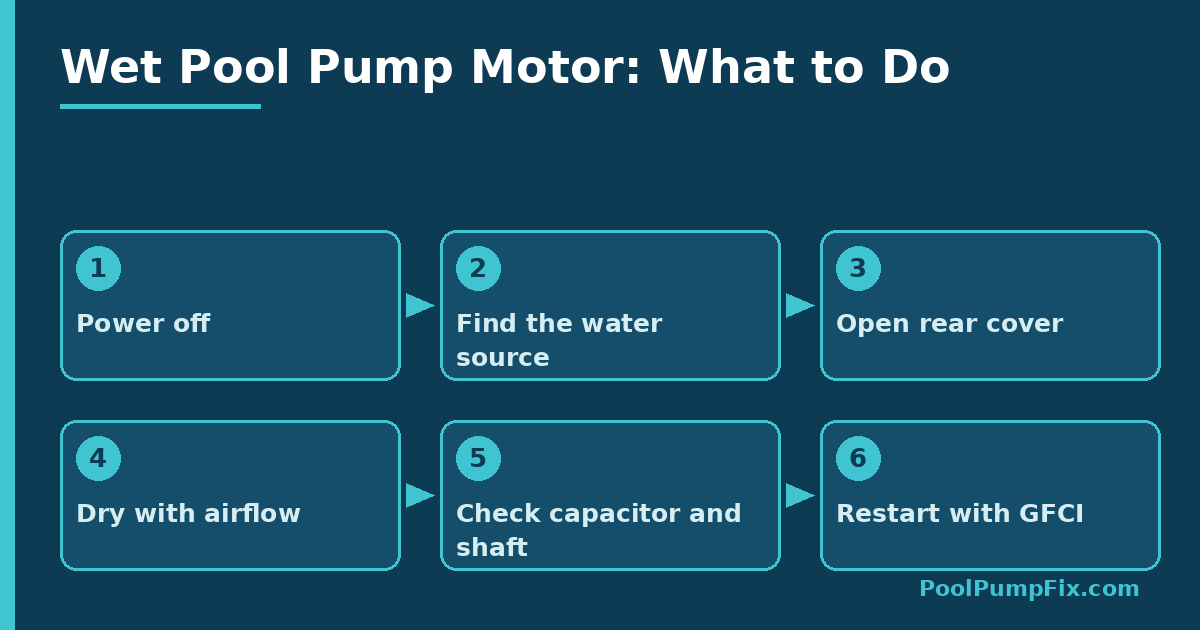
Step-by-Step: Drying and Checking the Motor
- Turn off power at the breaker and leave it off.
- Find and fix the source of the water.
- Remove the rear cover and towel out standing water.
- Dry the motor with airflow for a day or two.
- Inspect the capacitor, wiring and shaft and replace anything corroded.
- Restore power and watch the first start closely, with a GFCI on the circuit.
When to Call a Professional
If the GFCI trips on restart, or you are not sure the motor is dry inside, have it tested before running it again. Electrical faults in a wet motor can be dangerous around a pool.
Prevention Tips
- Keep the pump area drained and graded away from the equipment pad.
- Fix shaft seal leaks promptly so they do not drip onto the motor.
- Shield the motor from direct rain with a cover that leaves the vents open.
FAQ
Can a pool pump motor dry out and work again?
Often yes, if it only got damp and you let it dry fully, then confirm the capacitor, wiring and shaft are in good shape.
Is it safe to run a pool pump motor that got wet?
Not until it has dried and been inspected. A wet motor can short and trip the GFCI, or damage the windings.