
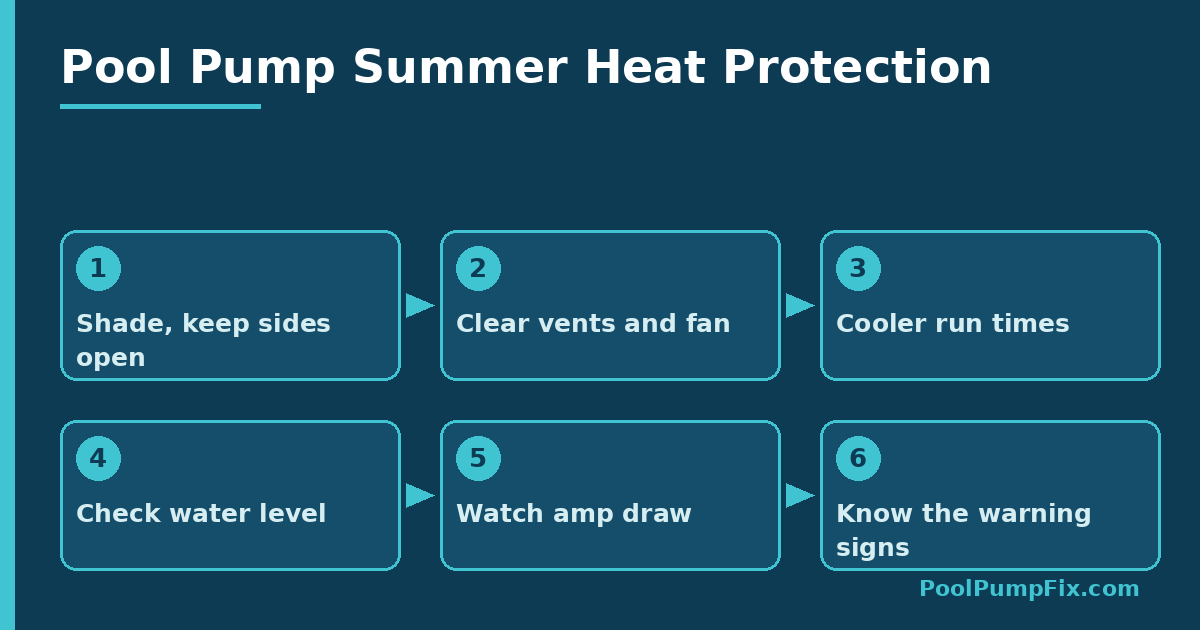
Quick Answer: Keep a pool pump cool in extreme heat by shading the motor without boxing it in, keeping the vents and fan clear, running it during the cooler parts of the day, and checking for the signs of heat stress before the thermal protector trips. Airflow around the motor matters more than any cover.
- Cost: Free to $100
- Difficulty: Easy
- Time Needed: 20–40 minutes
- Tools: Flashlight, brush, shade material
A motor sitting on a hot pad in direct sun can run well above its normal temperature before the pump itself does anything wrong. In desert summers that adds up fast. If your pump already shuts off on its own, read why a pool pump overheats and my overheating prevention guide.
Shade the Motor, Not Seal It In
Direct sun heats the motor housing and the surrounding air. A simple shade structure that blocks the sun but leaves the sides open is better than a closed box. The motor cools with a fan pulling air through its vents, so it needs room to breathe. Leave several inches around the motor on all sides.
Keep Vents and Fan Clear
Dirt, leaves, cobwebs and insect nests collect in the vents and around the fan cover. Inspect and clear them with a brush or compressed air with the power off. A blocked fan can make a healthy motor run hot.
Run It When It Is Cooler
If your schedule allows, split the run time so more of it falls in the morning and evening. For how many hours your pool needs, see how long to run a pool pump. Variable-speed pumps run cooler at lower speeds, which is one of their advantages.
Watch the Water Level
Evaporation drops the pool level fast in hot, dry weather. A pump pulling air can overheat the seal and then the motor. Check the level often and read running a pool pump dry for what happens when it goes wrong.
Signs of Heat Stress
- The motor shuts off and restarts on its own after cooling.
- The motor housing is too hot to hold your hand on.
- A burnt smell or discoloration near the motor.
- Higher amp draw than usual.
Step-by-Step: Summer Heat Check
- Turn off power and clear debris and nests from the motor vents and fan cover.
- Check the clearance around the motor and remove anything blocking airflow.
- Add shade that blocks direct sun but leaves the sides open.
- Review the timer and shift some run time to cooler hours if you can.
- Check the water level and skimmer so the pump never runs starved.
When to Call a Professional
If the pump keeps tripping on its thermal protector after you have cleared the vents and improved shade, have the motor and supply voltage checked. A motor that overheats in normal conditions is usually telling you about worn bearings or an electrical problem.
Prevention Tips
- Inspect the vents at the start of every summer and again mid-season.
- Keep the pump pad free of stored items that block airflow.
- Check the water level weekly in hot weather.
FAQ
Should I cover my pool pump motor in summer?
Provide shade, but keep it ventilated. A tight cover traps heat and can make overheating worse.
Can extreme heat damage a pool pump?
Yes. Heat shortens the life of windings, bearings and plastic parts, and it can trip the thermal protector.