
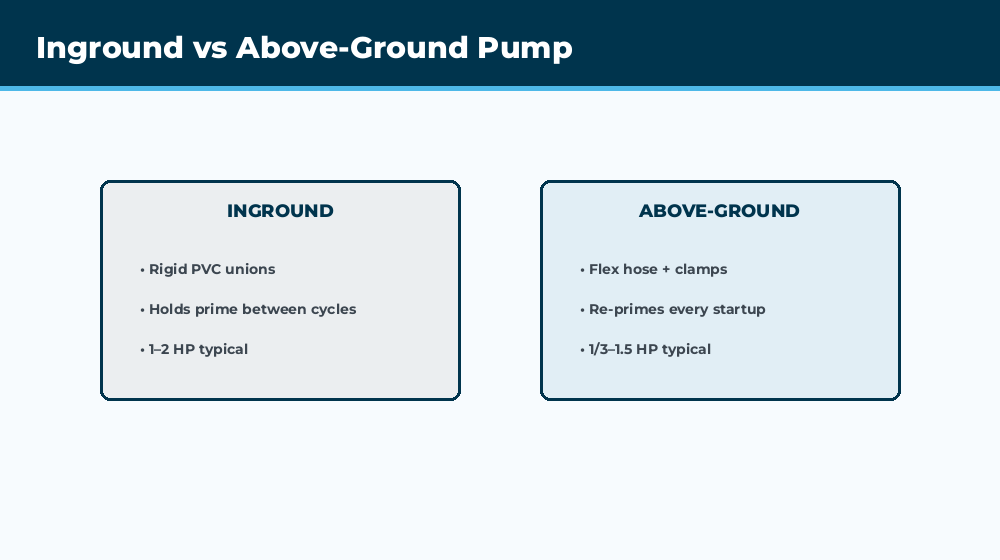
Above-ground pool pumps are typically smaller (1/3–1.5 HP), use flexible hose connections instead of rigid PVC unions, and sit above the water level — meaning they fight gravity and lose their prime completely every time they shut off. Inground pumps are larger, use rigid PVC plumbing, and usually sit at or near pool level where priming is easier to maintain between cycles.
The Core Physical Difference
An inground pool pump typically sits on a concrete pad at roughly the same elevation as the pool water, or sometimes slightly below grade. Gravity works with the system — once primed, the suction line tends to hold water between cycles. An above-ground pool pump sits beside the pool, but the pool itself is elevated relative to the pump in many setups, or the pump simply has no check valve holding prime, meaning every shutdown drains the suction line completely and every restart requires re-priming from scratch.
Direct comparison of above-ground and inground pool pumps explaining the construction and performance differences.
HP and Flow Rate Differences
Above-ground pumps are almost always smaller — 1/3 to 1.5 HP covers nearly all above-ground and inflatable pool applications, since these pools are typically much smaller in volume than inground pools. Inground pumps commonly range from 1 to 2+ HP to handle larger pool volumes and longer plumbing runs with more friction loss.
Plumbing Connection Differences
Above-ground pumps typically connect via flexible corrugated hose with hose clamps, which is easier for a homeowner to install without specialized tools but has higher friction loss than rigid pipe and is more prone to kinking. Inground pumps connect via rigid Schedule 40 PVC with threaded union fittings, offering lower friction loss and a more permanent, leak-resistant connection, but requiring PVC cement work and union assembly for installation or replacement.
Construction and Durability
Above-ground pumps are generally built to a lower cost point since they’re often replaced rather than repaired — at $35–150 for many models, replacement is frequently cheaper than diagnosing and repairing. Inground pumps are built for longer service life (8–15+ years) with more emphasis on repairability — replaceable shaft seals, O-rings, and motors rather than disposable construction.
Can You Use an Above-Ground Pump on an Inground Pool, or Vice Versa?
Technically sometimes, but it’s rarely a good idea. An above-ground pump on an inground pool is usually undersized for the volume and plumbing friction, leading to weak circulation and poor filtration. An inground pump on an above-ground pool is often oversized, creating more pressure and flow than the typically smaller above-ground plumbing and filter system are rated for, risking damage to fittings and the filter. Match the pump type to the pool type rather than trying to cross-apply equipment designed for a different category.
Priming Behavior — The Biggest Practical Difference
This is the difference that generates the most troubleshooting questions. Above-ground pumps need to be re-primed at essentially every startup since they sit above the water and have no check valve holding the prime — see our above-ground troubleshooting guide for the correct priming procedure. Inground pumps at grade level typically hold prime between cycles automatically; if yours doesn’t, that indicates a developing problem (air leak, failing O-ring) rather than being a normal characteristic of inground systems.
Frequently Asked Questions
Can I use an inground pool pump on my above-ground pool?
Generally not recommended — inground pumps are typically oversized for above-ground pool plumbing and filter systems, risking pressure damage to fittings rated for lower flow. Stick with pumps designed for your specific pool category.
Why does my above-ground pump need priming every time but my friend’s inground pump doesn’t?
Above-ground pumps sit above the water level and typically lack a check valve, so gravity drains the suction line completely every time the pump stops — this is normal for above-ground setups. Inground pumps at grade level hold their prime between cycles under normal conditions.
Are above-ground pool pumps less reliable than inground pumps?
They’re generally built to a lower cost point and shorter expected lifespan, reflecting the lower cost and complexity of above-ground pools overall. This isn’t necessarily a quality problem — it’s a different design point matched to a different product category and price expectation.
Can I add a check valve to my above-ground pump to stop it from losing prime?
Yes — a check valve installed on the suction line between the pool and the pump holds water in the line when the pump stops, significantly easing the re-priming requirement. See our check valve guide for installation details.
What HP pump do I need for an above-ground pool?
Most above-ground pools use 1/2 to 1.5 HP pumps depending on pool size — significantly smaller than typical inground pump HP because above-ground pool volumes are usually much smaller. Match to your specific pool volume using our sizing guide.