
A pool pump has 4–6 different O-ring locations, each with its own size and cross-section profile that are not interchangeable with each other. The fastest, most reliable way to order the right one is to bring the old O-ring to a pool supply store or measure it directly — guessing by eye leads to a poor seal even if the size looks close.
The O-Ring Locations on a Typical Pool Pump
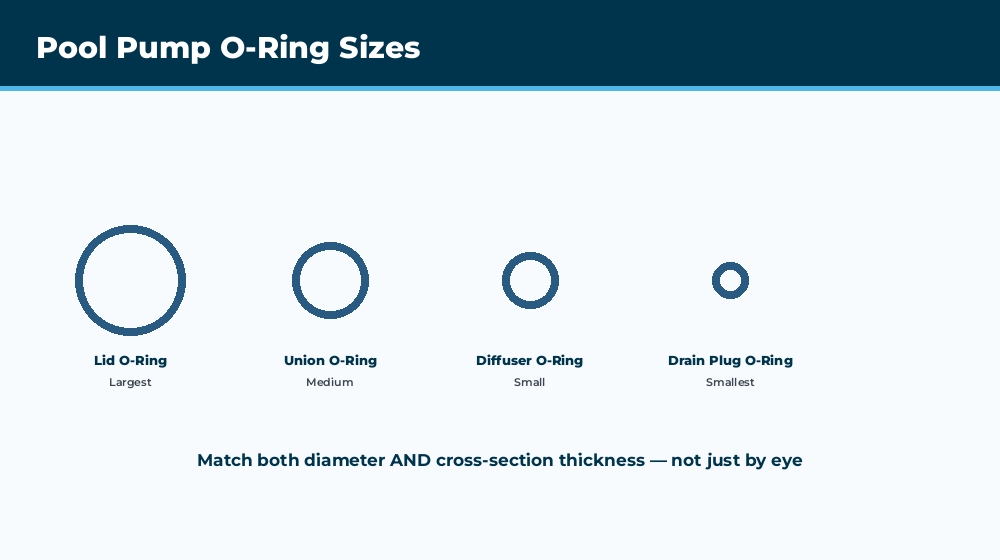
Strainer lid O-ring — the largest one, seals the clear or opaque basket lid; union O-rings — smaller, seal the suction and return union connections, often two of these; diffuser O-ring — seals the diffuser to the pump body, accessed when servicing the impeller; housing/body O-ring — on some pump designs, seals the wet end housing itself; drain plug O-rings — small ones on some models, seal the drain plugs. Each of these has a different diameter and cross-sectional thickness, and none are interchangeable with each other even on the same pump.
Replacing a pool pump O-ring under the clear lid — the most commonly replaced O-ring on any pump.
How to Measure an O-Ring Correctly
Two measurements matter: the inside diameter (ID) and the cross-sectional thickness (the thickness of the rubber itself, not the overall diameter). A caliper gives you precise numbers for both. An O-ring sizing cone (a tapered tool with diameter markings, $8–15) is even faster — slide the O-ring onto the cone and read where it stops for an instant ID reading. Getting both numbers right matters: an O-ring with the correct ID but wrong cross-section won’t seal correctly even though it looks like it fits.
Why Cross-Referencing by Pump Model Beats Guessing by Measurement
While measuring works, the more reliable method for most people is simply searching your exact pump model number plus “O-ring kit” on a pool supply site. Suppliers maintain cross-reference charts by model that account for manufacturing tolerances and specific groove depths that a basic measurement might not perfectly capture. This is especially true for older or less common pump models where the exact original specification matters more than a close measurement match.
Common O-Ring Sizes by Brand (Reference Only — Always Verify)
| Pump/Location | Approximate Size Reference |
|---|---|
| Hayward Super Pump lid O-ring | SPX1600Z2 (search this part number directly) |
| Pentair SuperFlo lid O-ring | 355013 (search this part number directly) |
| Sta-Rite Dyna-Pro lid O-ring | R172476 (search this part number directly) |
| Generic 1.5″ union O-ring | Most suppliers stock a universal-fit version |
| Generic 2″ union O-ring | Most suppliers stock a universal-fit version |
These part numbers are starting points for your search, not guaranteed matches for every model year — always confirm against your exact pump model before ordering.
Lubricating O-Rings Correctly
Use only silicone-based (Magic Lube, Jack’s 327) or Teflon-based lubricants — never petroleum-based products like Vaseline or standard plumber’s grease, which swell and degrade rubber O-rings over time. A thin, even coat is sufficient; over-application just attracts debris that can compromise the seal.
Frequently Asked Questions
Can I use any O-ring that looks close to the right size?
No — both inside diameter and cross-sectional thickness need to match closely for a proper seal. An O-ring that looks similar but has a different cross-section will either compress too little (leak) or too much (premature wear and possible damage to the groove).
How do I know if I need a lid O-ring or a union O-ring?
The lid O-ring is the larger one sealing the strainer basket cover — visible when you remove the clear or opaque pump lid. Union O-rings are smaller and located inside the threaded union collars connecting the pump to the suction and return plumbing.
What lubricant should I use on pool pump O-rings?
Silicone-based or Teflon-based lubricant only (Magic Lube, Jack’s 327). Petroleum-based products like Vaseline degrade rubber and shorten O-ring life significantly.
Where can I buy pool pump O-rings?
Local pool supply stores carry common sizes, and online suppliers like RepairClinic, PoolSupplyWorld, and InTheSwim list O-rings by exact pump model number, which is the most reliable way to get a correct match for less common models.
How often should I replace pool pump O-rings?
Lid O-rings every 2–3 years with regular lubrication, union O-rings every 3–5 years. Replace immediately if you notice flat spots, cracking, or any visible degradation regardless of how long it’s been in service.