
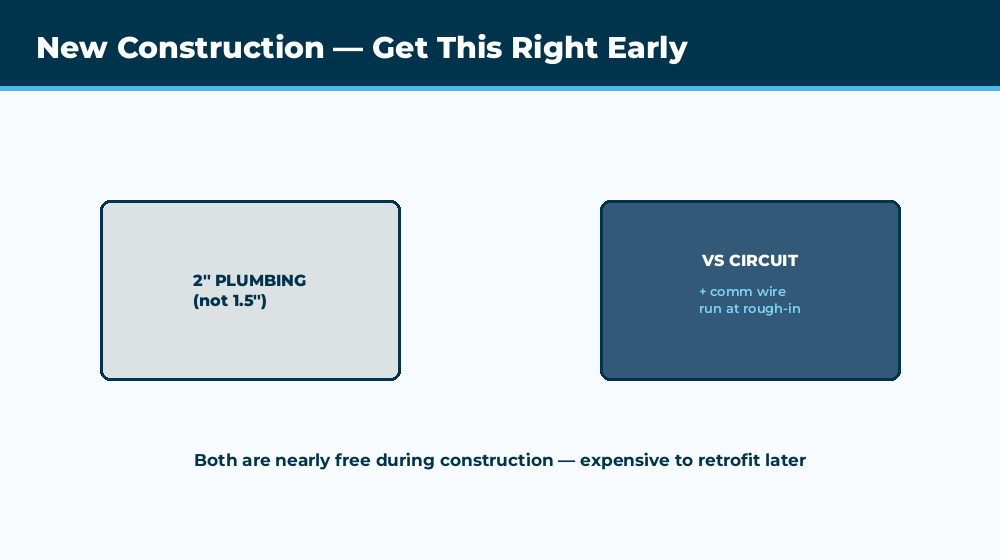
Pump selection for new construction happens before plumbing is set, which is your one chance to get pipe diameter right — a decision that’s expensive to undo later. Insist on 2-inch plumbing minimum for any pump over 1 HP, and decide on single-speed versus variable-speed before the electrical rough-in, since VS pumps need a dedicated circuit.
Why New Construction Sizing Decisions Matter More
On an existing pool, you’re often constrained by plumbing that’s already in the ground. On new construction, you have a one-time opportunity to size the plumbing correctly for whatever pump you choose — and the cost difference between right-sized and undersized pipe is trivial during construction but expensive to fix afterward (it means digging up concrete and re-plumbing).
Plumbing a swimming pool equipment pad during new construction — shows the suction and return pipe sizing decisions made at this stage.
Insist on 2-Inch Plumbing
For any pump 1.5 HP or larger (which covers the vast majority of residential installations), specify 2-inch suction and return plumbing rather than 1.5-inch. The cost difference in PVC pipe and fittings during construction is minimal, but 2-inch plumbing gives you headroom for a future pump upgrade and reduces friction losses significantly compared to 1.5-inch, especially if you add solar heating or water features later. I’ve seen too many pools built with 1.5-inch pipe that later needed a pump upgrade and couldn’t realize the full benefit because the plumbing became the bottleneck.
Decide Single-Speed vs Variable-Speed Before Electrical Rough-In
Variable-speed pumps need a dedicated 230V circuit and, if you want automation/app control, a separate low-voltage communication run alongside the power conduit. Deciding on VS before the electrician runs conduit means the communication cable goes in at the same time for a few dollars in extra wire, rather than requiring a separate trench later. See our single vs variable speed comparison for the full cost case — for new construction, I recommend VS in almost every situation given the long-term electricity savings.
Size for Current Needs, Plan for Likely Additions
Size the pump for your actual pool volume using our pump sizing guide. If you know you’ll add a water feature or solar heating within a year or two, mention this to your builder so plumbing can accommodate it (a stub-out for a future booster pump, or slightly oversized suction plumbing) without needing to oversize the main pump itself unnecessarily now.
Equipment Pad Layout and Ventilation
Specify at least 6 inches of clearance around the pump location for motor airflow, and avoid placing the pad where afternoon sun bakes the equipment all day in hot climates — some shade structure or strategic placement extends motor life. See our overheating guide for why this matters.
Get the Warranty Registration Process Started
Have your builder provide the pump model number, serial number, and installation date so you can register the warranty promptly. See our warranty guide for what to keep on file.
Frequently Asked Questions
What size pump should I get for a new pool?
Size based on your planned pool volume using the standard turnover calculation — see our sizing guide. Most residential pools up to 20,000 gallons need 1–1.5 HP single-speed or equivalent variable-speed.
Should I get variable-speed for a brand new pool?
In almost every case, yes. The electricity savings over the pump’s 8–12 year life dramatically outweigh the higher upfront cost, and getting the dedicated circuit and communication wiring in during construction is far cheaper than retrofitting later.
What pipe size should my new pool use?
2-inch suction and return plumbing for any pump 1.5 HP or larger. The marginal construction cost is small and it future-proofs the system against pump upgrades or added features.
Can I choose my own pump brand or does the builder decide?
You can almost always specify your preferred brand — discuss this with your builder during the equipment selection phase. Builders often have standard packages but most accommodate a specific brand request, sometimes with a price adjustment.
Should I install the pump myself to save money on a new build?
For new construction, I’d generally let the pool builder handle the pump and full equipment pad installation since it’s integrated with their plumbing and electrical work and typically covered under their installation warranty. DIY installation makes more sense for later replacement of an existing pump, not for original construction.