
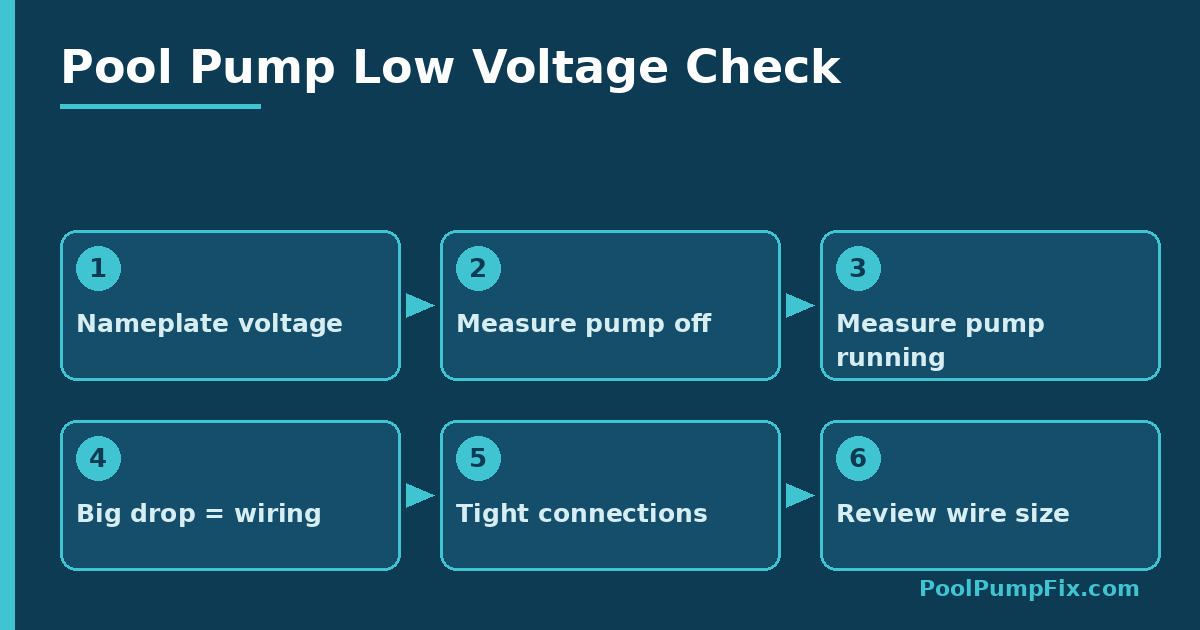
Quick Answer: A pool pump on low voltage draws extra current, runs hot and wears out faster. Measure the voltage at the motor while the pump is running, and if it is more than a few percent below the nameplate rating, look for loose connections, undersized or overlong wiring, or a heavily loaded circuit.
- Cost: Free to find, varies to fix
- Difficulty: Moderate
- Time Needed: 20–45 minutes
- Tools: Multimeter, screwdriver, flashlight
A pump that hums, runs hot or trips the breaker on a hot afternoon may not have a motor problem at all. Voltage that sags under load is easy to miss. This pairs with the symptoms in my overheating guide and the high amp draw article.
Why Low Voltage Hurts the Motor
A motor delivers a set amount of power. When voltage falls, the current rises to make up the difference, and extra current means extra heat in the windings. A pump that runs for years on weak voltage can fail much sooner than one on a healthy supply.
Common Causes
- Loose or corroded connections at the breaker, timer, disconnect or terminal board.
- Wire that is too small or too long for the load, especially on 115V circuits.
- Other loads on the same circuit.
- Utility voltage sag during peak summer demand.
How to Measure It
Measure the voltage at the motor terminals with the pump off, then again while it is running. A large difference between the two points to wiring losses. If the voltage is low even with the pump off, the problem is upstream. Be careful, because live testing is dangerous. If you are not comfortable, have an electrician do the measurements.
What to Do About It
Tighten and clean connections, check the timer contacts, and have the wire size reviewed if the run is long. Moving a dual-voltage pump to 230V can reduce voltage drop. See converting from 115V to 230V. A surge protector will not fix sag, but it can protect the motor from spikes; see pool pump surge protectors.
Step-by-Step: Test for Voltage Sag
- Read the nameplate for the rated voltage.
- Measure at the motor with the pump off and note the reading.
- Start the pump and measure again while it runs.
- Compare the readings. A big drop under load points to the wiring or connections.
- Check the connections at the breaker, timer and motor with the power off.
When to Call a Professional
Call an electrician if voltage is low at the panel, if the wire looks undersized, or if you find burnt or discolored connections. These are safety problems, not just pump problems.
Prevention Tips
- Have connections checked once a year, since heat and corrosion loosen them over time.
- Avoid extension cords or adding loads to the pump circuit.
- Use the correct wire size for the run length and load.
FAQ
How low can voltage go before it hurts a pool pump?
Motors tolerate small variations, but a sustained drop of more than a few percent below nameplate voltage increases heat and wear.
Can low voltage cause a pool pump to trip the breaker?
Yes. The extra current from low voltage can overload the motor and trip the breaker or thermal protector.