
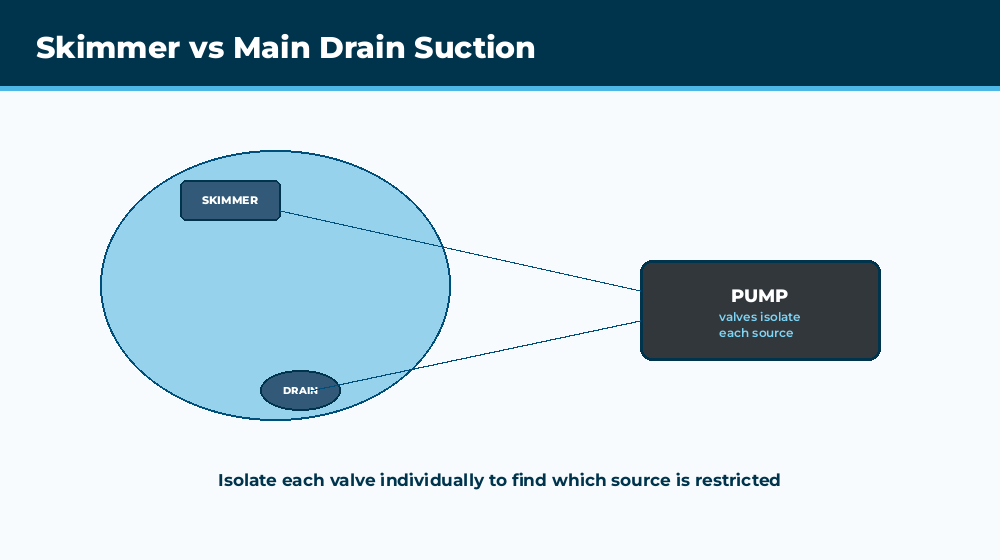
Most pools draw suction from two sources — the skimmer (surface debris) and the main drain (pool floor) — often through a single combined valve. If suction is weak, isolating which source is restricted narrows your diagnosis fast. Close one valve at a time and watch the pump’s pressure and basket behavior to find which side is the problem.
Why This Distinction Matters
Many residential pools combine skimmer and main drain suction into a single line feeding the pump through a 3-way or 2-way valve, or sometimes two separate valves you can isolate individually. If one source is clogged or has an air leak and the other is fine, the combined flow can still look “okay” while masking a real problem on one side. Isolating each source individually catches issues that combined-line diagnosis misses.
Unclogging a pool skimmer line — covers identifying and clearing skimmer-side suction blockages specifically.
How to Isolate Skimmer vs Main Drain
If your pool has separate valves for skimmer and main drain (check at the pad — look for two valve handles before the pump, sometimes labeled): close the main drain valve fully and run the pump on skimmer suction only. Note the pressure and flow. Then reverse — open main drain, close skimmer, and compare. A significant difference between the two tells you which source has the restriction.
If your pool has a single combined valve with no way to isolate, you’ll need to physically inspect each line — pull the skimmer basket and look down the throat with a flashlight, and if accessible, check the main drain grate at the pool floor for visible blockage or debris.
Skimmer-Side Problems
Clogged skimmer basket: the most common cause, check and clean it first — takes 30 seconds. Skimmer weir flap stuck or missing: the weir (the floating door at the skimmer mouth) should move freely; a stuck-open weir lets air in directly. A debris clog deeper in the skimmer throat or line: visible with a flashlight looking down the skimmer body, clearable with a plumber’s snake or by backflushing with a garden hose from the pump end.
Main Drain Problems
Main drain suction problems are less common but more serious to diagnose because the drain is underwater and harder to access. A clogged or partially blocked main drain grate reduces flow from that line specifically. Never swim or have anyone near an open or grate-missing main drain while the pump is running — main drain suction entrapment is a genuine safety hazard. If the grate is missing, cracked, or doesn’t meet current anti-entrapment standards (VGB Act compliant), address that immediately before running the pump on that line, regardless of any flow issue.
Main drain safety: Never operate a pool with a missing, broken, or loose main drain cover. Suction entrapment at an exposed main drain is a serious drowning hazard, especially for children. If you notice any drain cover issue, shut off suction to that line until it’s properly repaired or replaced with a VGB-compliant cover.
Combined Line Air Leaks
If both sources test fine individually but you still have suction issues only when both valves are open together, check the shared portion of plumbing closer to the pump — that’s the common path for both lines and an air leak there affects total flow regardless of which valve is open. See our air bubbles guide for the shaving cream test on shared fittings.
Frequently Asked Questions
Should I run my pool pump on skimmer, main drain, or both?
Most pools run best with both open simultaneously — this balances surface skimming (debris removal) with whole-pool circulation (the main drain pulls from the bottom). Running on just one source long-term can create circulation dead zones.
How do I know if my main drain is clogged?
Compare flow with main drain isolated (skimmer only) versus both sources open. If opening the main drain valve doesn’t meaningfully increase flow or pressure, the main drain line may be restricted. Visual inspection of the grate (if accessible) is the most direct check.
Can a clogged main drain damage my pump?
A fully blocked main drain doesn’t damage the pump directly since the skimmer can usually supply enough flow on its own, but it does reduce overall circulation efficiency and can contribute to dead zones and poor water clarity in deeper areas of the pool.
My main drain has no separate valve — is that normal?
Some pools, especially older or simpler installations, plumb the main drain and skimmer into a single shared line without individual valves. This is normal but makes isolated diagnosis harder — you’ll need physical inspection of each source rather than valve isolation.
Is it safe to swim with the main drain suction running?
Yes, as long as the drain cover/grate is properly installed, undamaged, and meets current anti-entrapment standards (dual drains or VGB-compliant single drain covers). A missing or damaged cover is the actual hazard, not the suction itself on a properly equipped drain.